
AJOT: Out of the Box with SeaCube: CEO Says Cold Chain Resilient and Still Growing
Mar 24, 2026

News
Mar 24, 2026
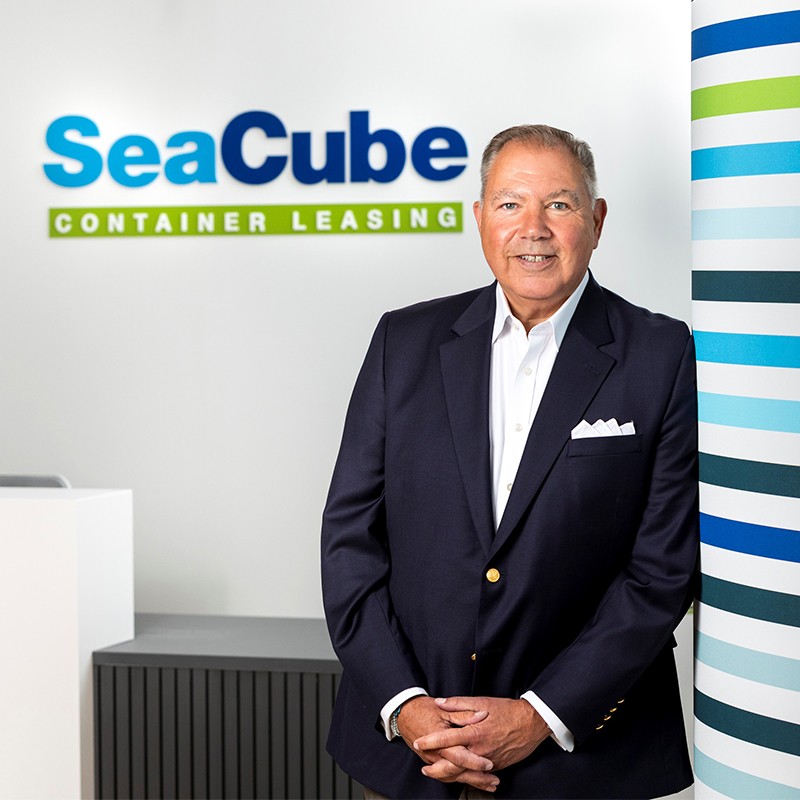
SeaCube Container Leasing says in 2025 the company was the world’s largest investor in refrigerated equipment. Uncertainty grips the dry container market, however, SeaCube insists reefer demand remains robust, buoyed by an expanding list of pharmaceutical, food, and perishable demand across the globe. SeaCube’s customers are a who’s who of shipping including trucking companies, manufacturers and 3PLs. Robert “Bob” Sappio, SeaCube’s CEO since 2017, has compiled an impressive 40-year maritime career and remains a respected voice in the global shipping industry. The American Journal of Transportation was able to recently touch base with Sappio to fire a few questions at him and get his insight on a variety of topics.
AJOT: You were not able to serve this year on the TPM2026 panel discussion titled “Investing in the Cold Chain — Is It Still a Good Bet?” So, we will ask you…Is it still a good bet?
Sappio: The global refrigerated cargo market continues to be resilient. In 2025 we saw growth of about 6% in the reefer trade supported by the fresh food and protein segments. We are forecasting continued growth in the sector of about 4% CAGR through 2029.
AJOT: You recently said “Looking to the horizon, 2026 doesn’t look much improved” from 2025’s volatility and uncertainty due to trade policy, geopolitics and port congestion, etc… Would you mind expanding on those thoughts?
Sappio: Disruptions, complexity, and an uncertain macro environment is no longer a sometime event, it is now an all the time event. Uncertainty will be our constant companion, and we will need to accept that and navigate a course forward that allows us to adapt and overcome these challenges.
AJOT: How is the military escalation in Iran going to affect the “Return to the Red Sea” and subsequently the global shipping environment who many have said has “too many ships and too many dry containers in the system?”
Sappio: The military escalation in Iran adds to an already volatile and dangerous situation in the region and directly impacts global shipping. The Straits of Hormuz, the Red Sea and Bab al Mandeb Strait are key maritime choke points that need to remain open to navigation. If not, the impacts will not only be felt regionally in the Middle East, but globally as ships and equipment back up and end up out of position. Network congestion will follow, and you will see equipment and vessel shortages. Relay ports that serve the Middle East will especially be impacted like Singapore, Tanjong Pelepas and Colombo. This situation in the Persian Gulf with Iran will impact and postpone any near-term return to the Red Sea.
AJOT: Is the refrigerated cargo market continuing to prove durable amid shifting trade policy and rising geopolitical risk?
Sappio: Yes. The refrigerated trade has been less impacted by tariff changes, and it is driven less by GDP and more by populations growth, trade patterns and people wanting to eat more fresh food and protein. The government may be able to implement tariffs, but they can’t move the equator. The RFR trade is very durable and is why SeaCube has made this our focus.
AJOT: The market for modular (portable) cold rooms is expected to grow double digits over the next decade. Is entering this different but related environment exciting for SeaCube?
Sappio: SeaCube has launched its own portable cold storage company and also made an acquisition in this space. As the largest and most consistent investor in refrigerated equipment, SeaCube has a right to be in the portable cold storage space. We view this sector as growing and it provides an opportunity for us to extend the use of our assets and leverage our strength and expertise in the cold chain more broadly. We are an equipment solutions provider, firstly in the marine sector, but now in other growth sectors.
AJOT: SeaCube recently issued a press release announcing four strategic leadership investments; can you talk about the global shipping industry’s need to not only invest in talent but develop it as well?
Sappio: At the end of the day all the containers come from the same factories, the lessors mostly raise their capital in the same ABS and financial markets. What differentiates companies is the people they hire and develop and the cultures they invest in. The equipment leasing industry and the shipping industry needs talented young people to help drive and lead the industry into the future. Shipping is a great industry and when you make a career in this business you are serving something bigger than yourself. It is the great silent industry that most people don’t appreciate or understand – but cannot live without. I encourage young people to join this industry, bring the right attitude and a full heart and we’ll teach you the business.
AJOT: We were able to interview Ed Dryden of Carrier recently and he spent a lot of time discussing Transicold’s technology and what it does to improve the global cold chain. Can you talk about your company’s relationship with Carrier and SeaCube’s commitment to “embracing technology?”
Sappio: Carrier is our trusted partner and provides most of our refrigerated equipment. I know partner is an overused word, but the relationship we have built with Carrier is important to our success at SeaCube. Every Carrier reefer we invest in comes “telematics ready.” Technology and how we use information to make better decision is at the core of what we are doing at SeaCube.
AJOT: Is reducing the standard cold chain temperature from -18 ºC to -15ºC a realistic idea?
Sappio: SeaCube is proud to be the only container lessor to be a member in the Move from -18C to -15C. We do think it is possible and think the cross collaboration amongst industry stakeholders will be the key to success here. It will take all of us to come together, supported by technology to succeed.